
Among the myriad linear motion solutions available, linear roller guides have emerged as a common choice in the manufacturing sector due to their exceptional rigidity, high load-bearing capacity, and ultra-high precision. This article provides a systematic analysis of linear roller guides—covering their definition, structural components, operating principles, and core advantages—to assist you in making more informed and professional decisions during the selection and application stages.
1. What are Linear Roller Guides?
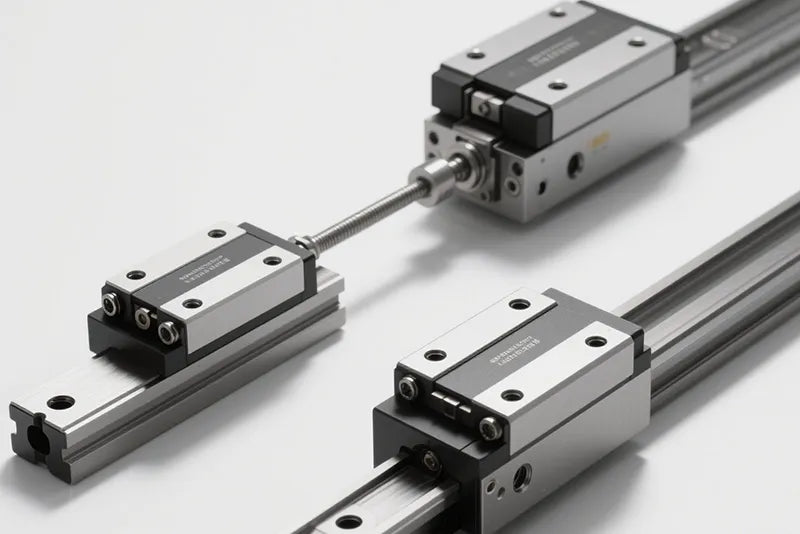
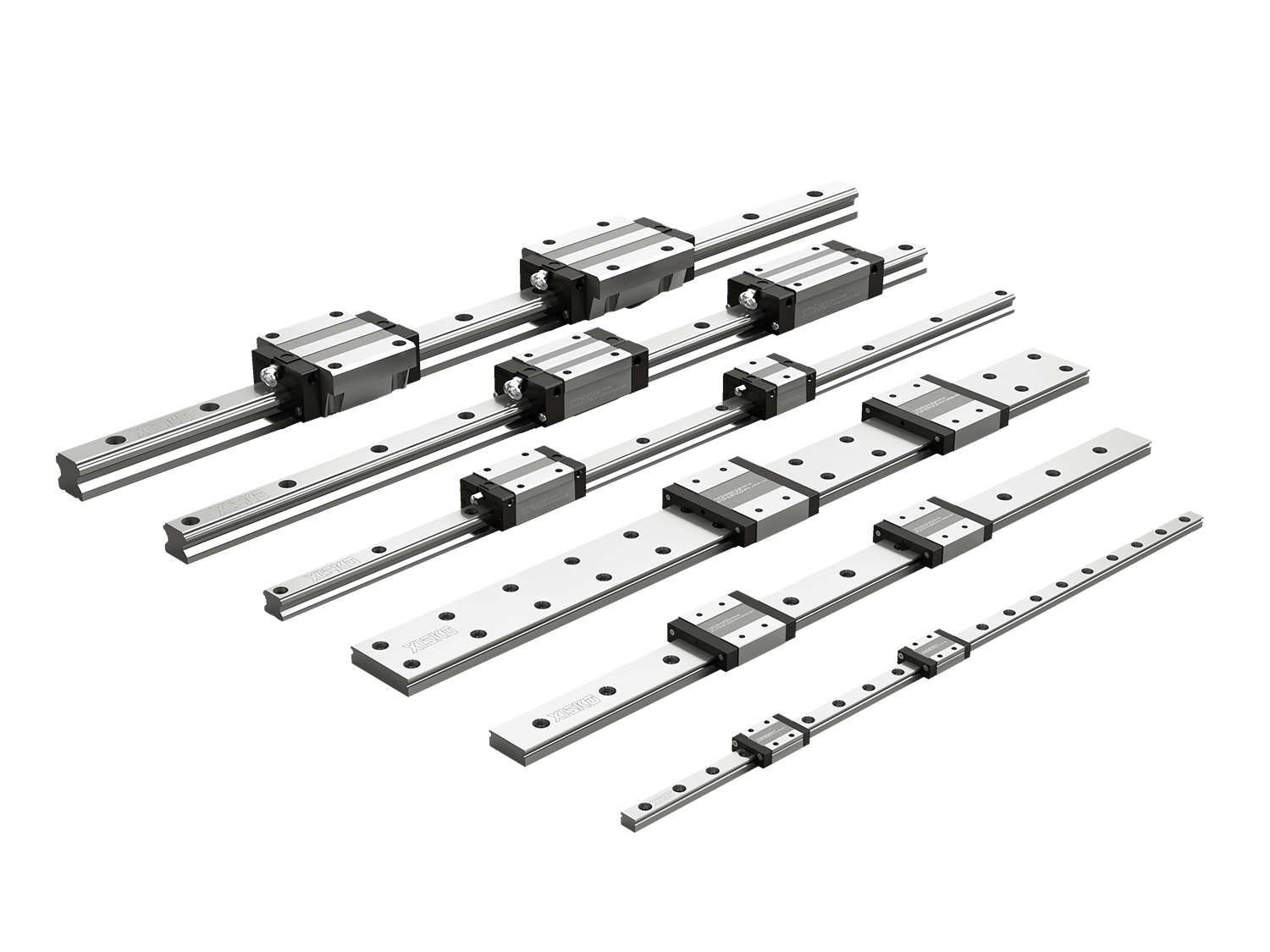
A linear roller guide is a mechanical transmission component that facilitates high-precision linear motion of a carriage (block) along a rail by utilizing rollers (cylindrical rollers) as the rolling elements. Within the Simkawa linear guide system, linear roller guides boast the highest load-bearing capacity and the greatest rigidity.
Typical Applications
- High-precision CNC machine tools;
- Laser cutting / welding equipment (e.g., gantry structures);
- Automated handling and robotic systems;
- Heavy-duty industrial equipment.
2. Structural Components of Linear Roller Guides
A linear roller guide consists of four core components: the guide rail body, the carriage (block), the rollers, and the seals.

2.1 Guide Rail Body
The guide rail body is typically manufactured from high-carbon steel. Its surface undergoes precision grinding and hardening treatments—achieving a hardness of HRC 58–62—to ensure long-term wear resistance during operation.
2.2 Carriage and Rollers
The interior of the carriage features a circulating roller structure, utilizing precision-machined raceways to facilitate low-friction motion.
2.3 Seals
The sealing system is a critical component that is often overlooked. High-quality linear guides are equipped with multi-layer labyrinth seals; these seals not only prevent the ingress of contaminants—such as metal chips and dust—but also effectively retain the lubricating grease. Certain specialized models are further equipped with oil scrapers to automatically remove surface impurities from the guide rail during high-speed operation.
3. What are the Advantages of Linear Roller Guides?
3.1 High Load-Bearing Capacity
The LR series of linear roller guides employs cylindrical rolling elements as a substitute for traditional steel ball rolling elements. This transition from point contact to line contact significantly enhances the guide's load-bearing capacity. Under heavy-load operating conditions, the cylindrical rolling elements exhibit only negligible elastic deformation.
3.2 High Rigidity
Furthermore, this series of linear guides features a design incorporating four rows of rolling elements, a 45° contact angle, and a DB-type configuration; this design ensures exceptionally high rigidity and superior load-bearing performance. These guide rails are capable of withstanding various types of loads—including radial, reverse-radial, and lateral forces—across four distinct directions.
3.3 Smooth Operation
Furthermore, the interior features a specially designed rolling-element synchronizer that effectively eliminates the "gearing effect"—the friction-induced interaction between rolling elements—that typically occurs during motion. This design significantly reduces operational resistance, enhances running smoothness, and substantially lowers noise levels.
Validated by years of practical application, the pre-load settings have achieved a perfect balance among operational resistance, rigidity, and service life. The LR series linear guide rails are fully capable of meeting the rigorous demands of high-end precision equipment for high accuracy, high load-bearing capacity, high reliability, low noise, and smooth, stable linear motion.
4. Roller Guides vs. Ball Guides
| Item | Linear Roller Guides | Linear Ball Guides |
| Moving Medium | Spherical Roller | Spherical Ball |
| Contact Type | Line Contact | Point Contact |
| Load-bearing Capacity | Strong | Average |
| Precision | High | Medium-High |
| Speed | Medium | High |
| Application Scenarios | Suitable for high rigidity and heavy loads | Suitable for high-speed operation and light loads |
Summary
As a critical component of high-end linear motion systems, linear roller guides have become indispensable core components in modern industrial equipment. Thanks to their line-contact structure, they offer superior advantages in terms of high load-bearing capacity, high rigidity, and high precision. If you have any further questions, please feel free to contact us!
FAQ
1. Are there any specific precautions to observe when using roller linear guides?
- Preventing Corrosion
When handling linear guides directly by hand, thoroughly wash away any perspiration from your hands and apply a high-quality mineral oil before proceeding. Particular attention should be paid to rust prevention during the rainy season and summer months.
- Maintaining a Clean Environment
Keep the linear guide and its surrounding environment clean. Even microscopic dust particles—invisible to the naked eye—can increase wear, vibration, and noise if they enter the guide mechanism.
2. Do you provide test documentation for linear roller guides?
Certainly. If you require it, we can provide a certificate verified by a certified testing agency.