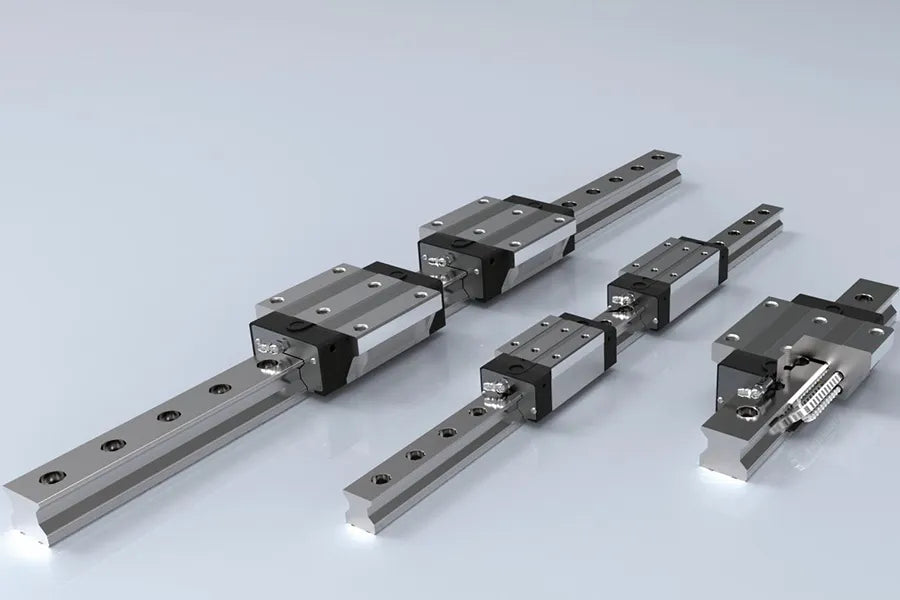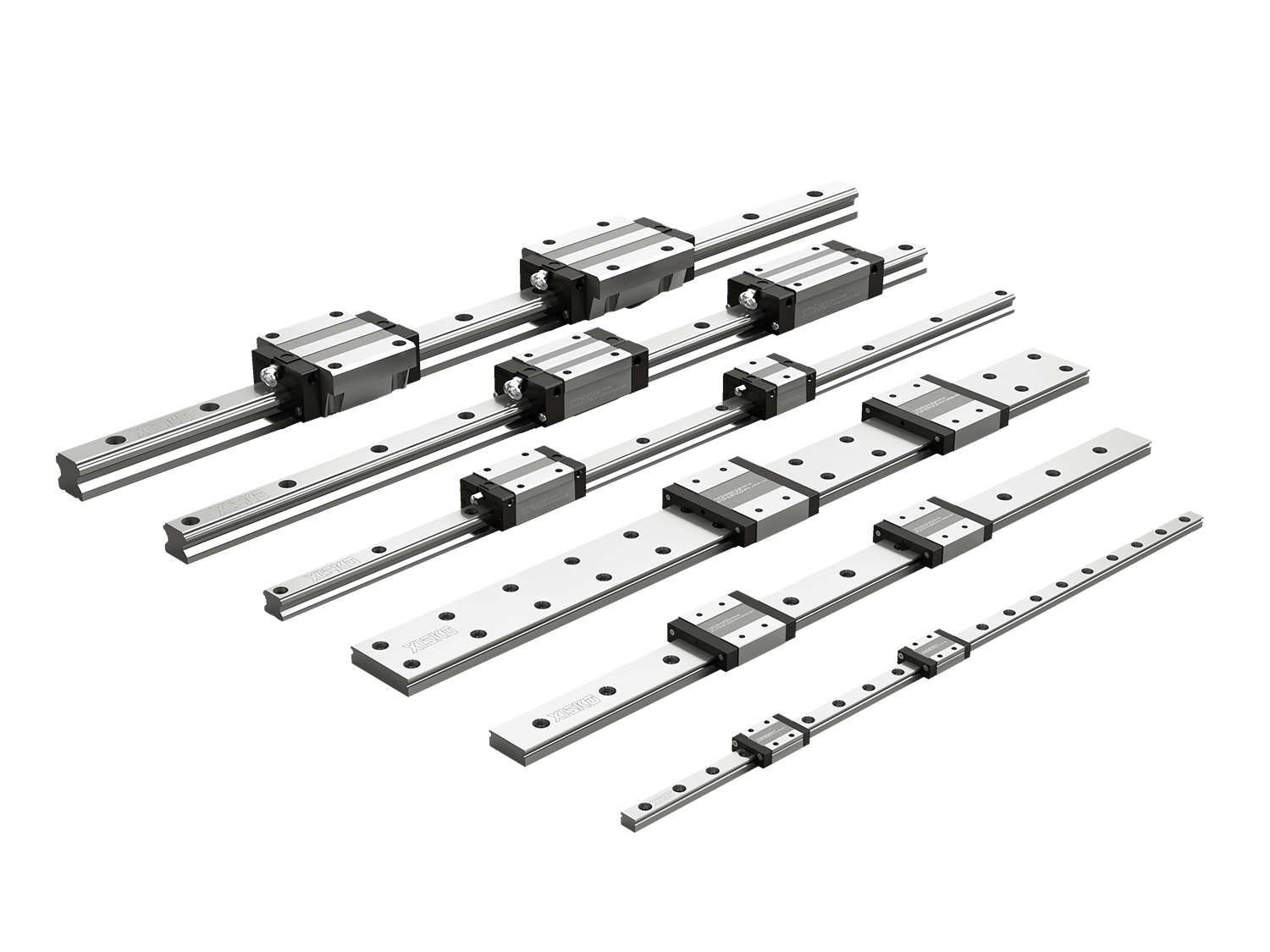

Mini linear rails are essential mechanical transmission components for achieving high-precision linear motion, widely used in automation equipment, precision instruments, electronic equipment, medical equipment, semiconductor equipment, and 3C industry equipment. They achieve low-friction, high-precision linear motion through the cyclic rolling of steel balls within a slider between the guide rail and the slider. Compared to traditional sliding guides, linear guides offer higher positioning accuracy, lower frictional resistance, and a longer service life.
1. Key Factors to Consider When Selecting Mini Linear Rails
1.1 Equipment Load Capacity
Load capacity is one of the most important factors in guide selection.
Equipment typically experiences the following during operation:
- Vertical load;
- Horizontal load;
- Torque load;
- Dynamic impact load;
If the equipment has a large torque load, such as a single-rail support structure, it is generally recommended to choose the LGW wide-type miniature guide.
If the equipment load is small and space is limited, the LGN narrow-type guide is usually sufficient.
1.2 Guide Rail Structure Types
LGN Narrow Mini Guide Rail
- Small size and lightweight, especially suitable for miniaturized equipment. Utilizes a Gothic four-point contact design, capable of withstanding loads in all directions, and features high rigidity and precision.
- Offers various specifications to accommodate limited space and rated loads for ease of design.
- Equipped with a wire ball retainer on the slider to prevent ball detachment, facilitating slider and guide rail assembly.
- Available in stainless steel and carbon steel. The stainless steel version uses 440C steel for both the slider and guide rail, providing rust and corrosion resistance, suitable for rust-proof environments and cleanrooms with dust-free requirements.
LGW Wide Mini Linear Rail
- Widened guide rail design significantly improves torque load capacity, allowing for single-axis use.
- Gothic four-point contact design, capable of withstanding loads in all directions and featuring high rigidity.
- The slider is equipped with a miniature retaining wire, preventing ball detachment when the slider is removed.
- The slider and all metal parts are made of stainless steel, which is corrosion-resistant.
1.3 Guide Rail Precision Grades
The precision of LGN and LGW series miniature guide rails is divided into three grades: N (standard), H (high precision), and P (precision). Customers can choose the appropriate precision according to their equipment's precision requirements.
2. Typical Applications of Miniature Linear Guides
2.1 LGN Series Mini Linear Rails
- Applications
3C equipment, semiconductor, automation, medical industry, robotic arms, precision measuring instruments, and other small sliding devices.
- Features
Stainless steel material, lightweight and compact, suitable for applications with space constraints.
2.2 LGW Series Mini Linear Rails
- Applications
3C equipment, semiconductor, automation, medical industry, robotic arms, precision measuring instruments, and other small sliding devices.
- Features
Stainless steel material, flat and wide shape, better torque resistance, suitable for single-axis use.
3. Model Selection
Simkawa Miniature Linear Guide Series:
LGN7C, LGN9C, LGN12C, LGN15C;
LGN7H, LGN9H, LGN12H, LGN15H;
LGW7C, LGN7C, LGN7C, LGN7C, LGN7C;
LGW7H, LGN7H, LGN7H, LGN7H.
Summary
Mini linear rails play a crucial role in modern automated equipment. Proper guide selection not only improves the operating accuracy of the equipment but also enhances its stability and lifespan.