
Thread direction may seem like a "minor detail," but it embodies industrial ingenuity—from aligning with human habits to ensuring safety, every aspect is designed to make the fastener practical and durable.
1. What is a Right Hand Screw Thread?
- Thread direction refers to the path a screw (or nut) follows as it advances during rotation—much like the "run" of a staircase; some spiral upward clockwise, while others spiral counter-clockwise.
- Threads are categorized as either "right-hand" or "left-hand," a distinction that can be determined using the simple "right-hand rule."
- The "Right-Hand Rule": Extend your right hand and curl your four fingers to match the direction of the thread's rotation; your thumb then points in the direction the screw advances when being tightened. This configuration is known as a "right-hand thread," the most common type.
2. How Right Hand Screw Threads Work?
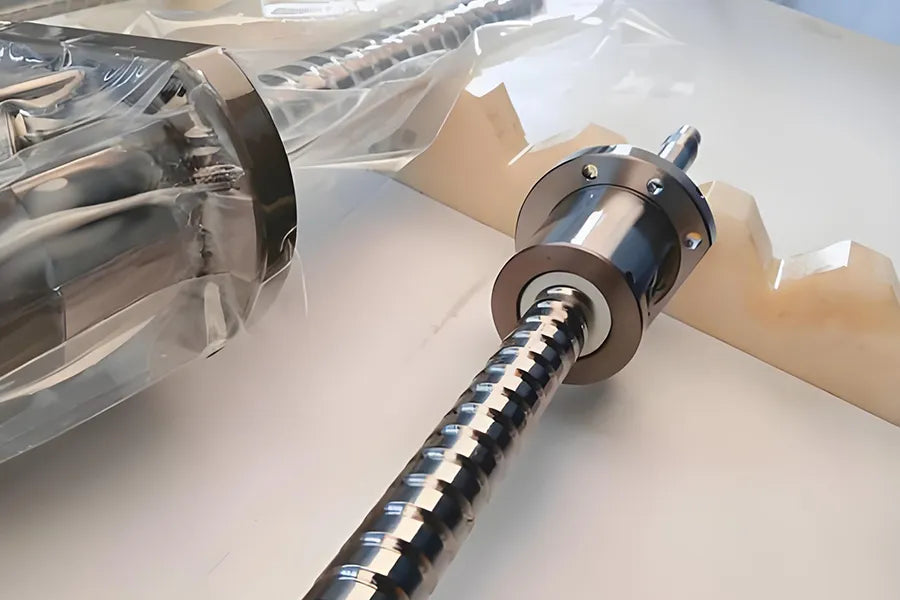
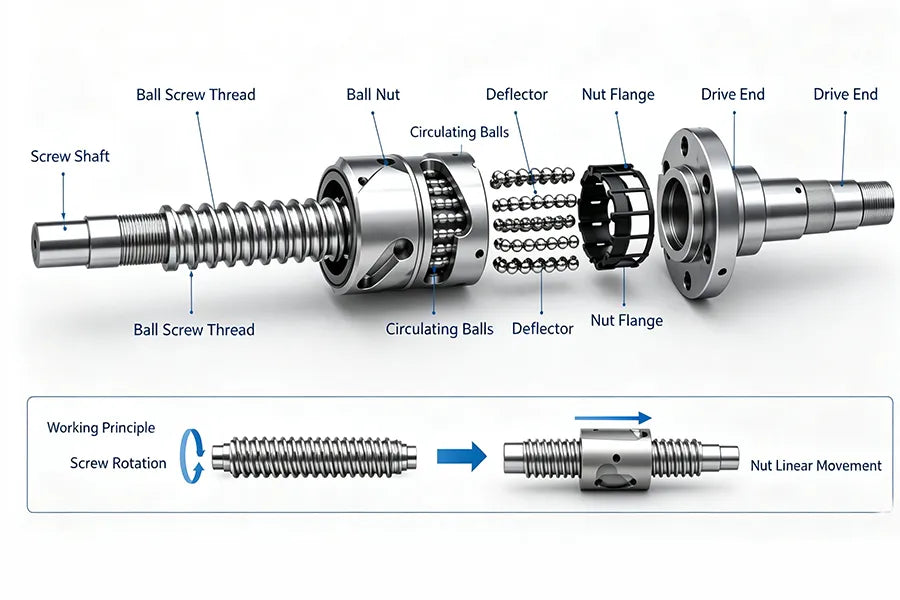
A right hand screw thread is essentially a helical structure distributed continuously around the surface of a cylinder or cone. When a screw, nut, or lead screw rotates, the threaded pair converts this rotational motion into linear axial motion.
In standard fastening applications, rotating a screw or nut clockwise draws the two connected components together, generating an axial clamping force. Once the required clamping force is achieved, friction between the thread surfaces helps maintain the stability of the connection.
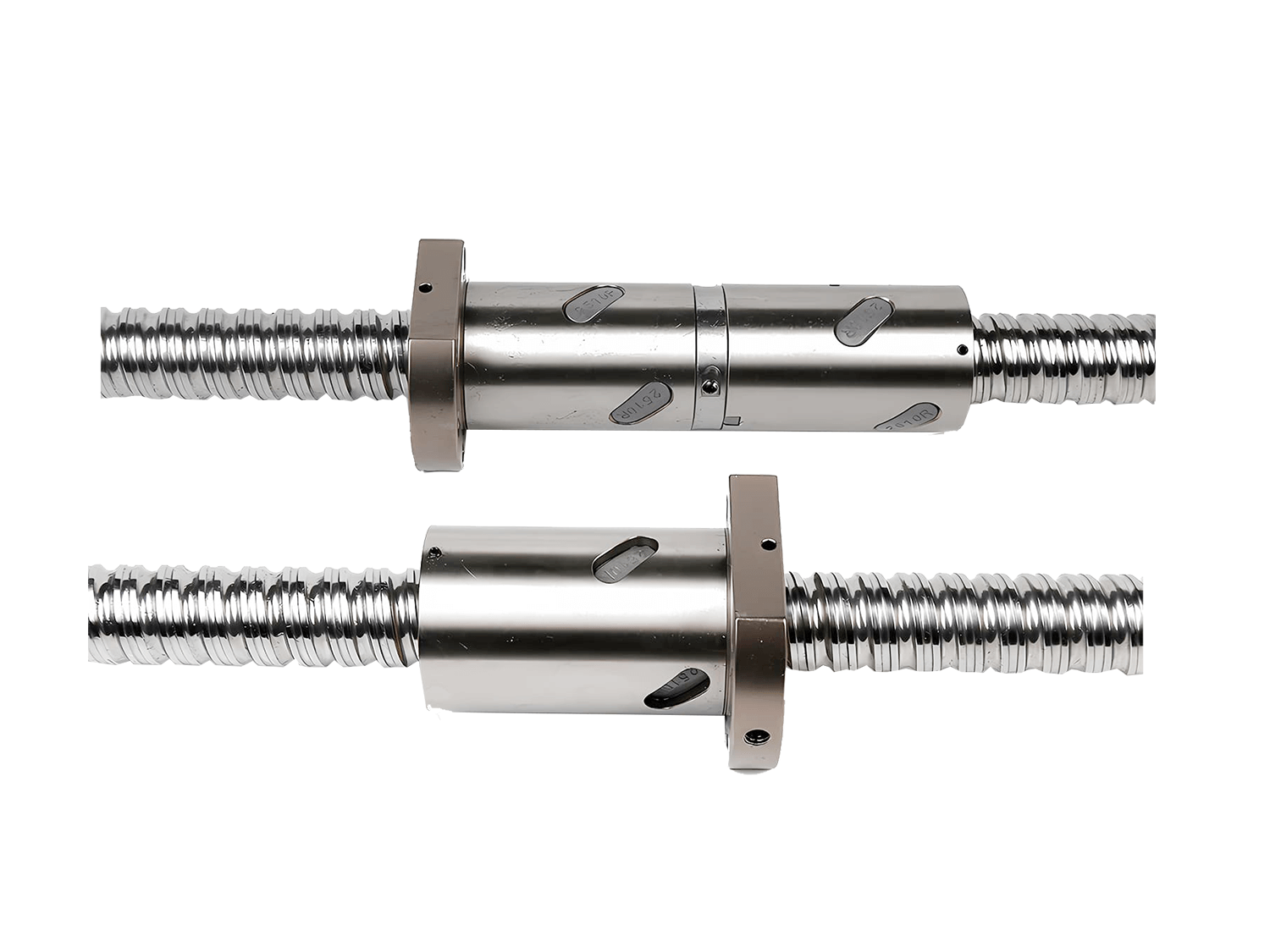
In lead screw drive systems, right-hand threads can also convert the rotational output of a motor into linear motion for a worktable, slide, or actuator. The direction of movement depends on:
- The direction of the lead screw's rotation;
- The thread's direction (hand);
- Which component—the lead screw or the nut—is fixed;
- The observation angle and installation orientation.
Therefore, in systems using ball screws, trapezoidal lead screws, or precision drives, the final direction of movement cannot be determined solely by clockwise or counter-clockwise rotation; the overall mechanical structure must also be considered.
3. Why are Most Threads Right Hand Screw Threads?
3.1 Aligns with Most People's Physical Habits
Industrial design follows ergonomic principles. Since approximately 90% of the global population is right-handed, the arm muscles exert force more naturally and powerfully during a clockwise rotation—such as when wringing out a towel or turning a door lock; most people instinctively apply force in a clockwise direction.
3.2 Established Industrial Conventions
Using a standard direction saves costs and prevents confusion. Since the First Industrial Revolution, machinery in Europe and the United States has predominantly utilized right-hand threads. With the unification of international standardization systems, right-hand threading became the mainstream standard; unless there is a specific requirement, there is no need to manufacture left-hand threads.

4. In Which Scenarios are Left-Hand Threads Required?
Although less common, left-hand threads are a "safety necessity" in specific scenarios. Using the wrong type can lead to equipment failure or even accidents. Left-hand threads are used in the following three types of scenarios:
4.1 Rotating Parts Prone to Loosening During Operation
Typical examples include electric fan blades, the left pedal of a bicycle, and drill press spindles.
4.2 Specialized Industries Requiring Safeguards Against Operational Errors
In sectors with extremely high safety standards—such as aviation, healthcare, the petroleum industry, and defense—left-hand threads are used on certain critical components as a "marker" to alert operators to exercise caution, thereby ensuring safety and reliability.
4.3 Scenarios Involving Reverse-acting Forces
Certain mechanical "recoil mechanisms" are subjected to continuous reverse impact forces during operation. If right-hand threads were used, the impact force would gradually loosen the screw; conversely, with left-hand threads, the impact force actually tightens the threads further, ensuring the equipment operates stably.
Summary
Right hand screw thread is the most common thread direction in the industrial sector. Its clockwise tightening action aligns with the habits of the majority of users and facilitates standardized production, installation, and maintenance.