
Choosing a higher precision grade does not always mean better machine performance. For example, a standard automation system may operate reliably with N-grade guides, while a precision inspection platform may require SP- or UP-grade guides to control motion errors.
So, what are the differences between N, H, P, SP, and UP precision grades? Which industries are they best suited for?
This guide explains the five main linear guide precision grades, their typical industrial applications, and how to select an appropriate grade for different types of equipment.
1. Understanding the Five Precision Grades of Linear Guides
Linear guide precision refers primarily to the dimensional accuracy and running accuracy of a guide rail and its carriage. Important parameters include mounting height tolerance, width tolerance, dimensional variation between carriages, and running parallelism.
Precision grades are commonly classified into five levels, from standard to ultra-high precision.
| Precision Grade | Classification | Typical Applications |
|---|---|---|
| N | Normal | Packaging, conveying, general machinery |
| H | High | Industrial automation, robotics, electronics assembly |
| P | Precision | CNC machine tools, laser processing, precision assembly |
| SP | Super Precision | Semiconductor equipment, optical inspection, precision grinding |
| UP | Ultra Precision | Precision metrology, advanced semiconductor equipment, ultra-precision positioning systems |
Note: Some manufacturers use C instead of N for their normal precision grade. Grade names and numerical tolerances can vary between manufacturers and product series. Always consult the applicable technical specifications.
The main difference between these grades is the level of manufacturing accuracy and geometric consistency that the linear guide assembly can provide.
As precision requirements increase, tighter dimensional control and more demanding manufacturing and inspection processes are generally necessary.
However, the final positioning accuracy of a machine also depends on its drive system, mounting accuracy, temperature stability, structural rigidity, and control system.
2. N Grade: General Industrial Machinery and Packaging Equipment
N-grade linear guides are suitable for equipment that requires reliable linear movement but does not demand exceptionally tight geometric tolerances.
These guides offer a practical balance between performance and purchasing cost, making them an economical option for many industrial applications.
Typical industries and equipment:
-
Packaging industry: Cartoning machines, labeling equipment, packaging transfer mechanisms, and automatic sealing machines.
-
Logistics and warehousing: Material handling equipment, sorting machines, and automated transfer platforms.
-
General manufacturing: Workpiece loading systems, basic machine slides, and auxiliary positioning mechanisms.
For example, an automated packaging machine may require consistent movement over thousands of operating cycles without requiring micrometer-level geometric accuracy. An N-grade linear guide can often satisfy this requirement when properly sized and installed.
Recommended Simkawa products:
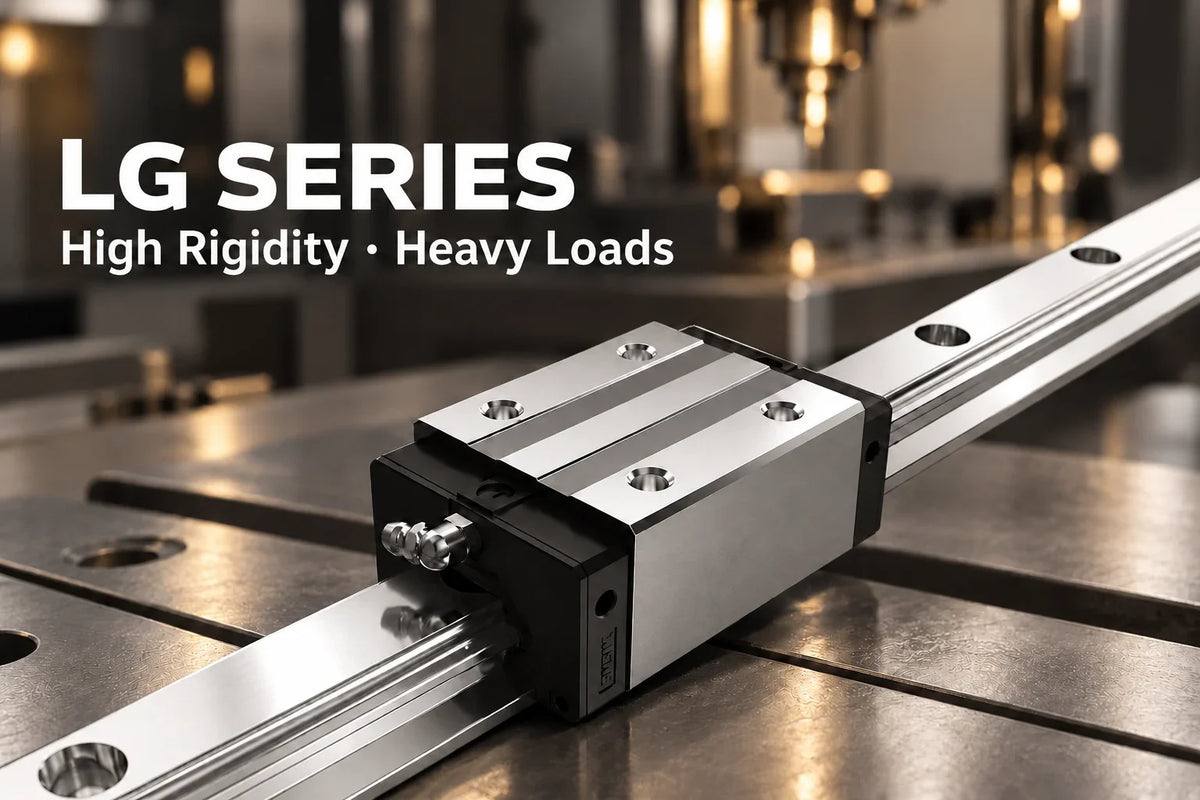
LG Heavy Duty Linear Guide — suitable for industrial machinery requiring strong load support and stable operation.
LM Guideways — suitable for compact industrial equipment with limited installation height.
N grade is generally a starting point for applications where stable movement, durability, and cost control are more important than extremely tight dimensional tolerances.
3. H Grade: Industrial Automation and Robotic Systems
H-grade linear guides offer tighter accuracy tolerances than N-grade products and are suitable for machinery requiring more consistent guidance and component alignment.
They are widely applicable to automated manufacturing environments where repetitive movement and assembly consistency are important.
Typical industries and equipment:
-
Industrial robotics: Robot linear axes, automated loading systems, and robotic transfer units.
-
Electronics manufacturing: PCB handling equipment, component assembly machines, and automated testing fixtures.
-
Automotive manufacturing: Component assembly lines, automated inspection stations, and positioning platforms.
-
Medical equipment manufacturing: Automated sample-handling systems and laboratory processing machines.
For example, an electronic component assembly machine must repeatedly move components into defined positions. H-grade guides can help reduce variation caused by the guide assembly, although the machine's overall positioning performance also depends on its drive and feedback systems.
For automated systems operating at high speeds, guide structure, lubrication, preload, and load capacity should be considered alongside the precision grade.
Recommended Simkawa products:
LM Guideways — the low-profile design is appropriate for compact automation machinery.
LMGQ Linear Guideway — features a ball-linkage design intended to reduce operating noise and promote smooth movement.
H grade is an appropriate option for many industrial automation systems that require better dimensional consistency than general-purpose machinery without necessarily requiring P-grade accuracy.
4. P Grade: CNC Machining and Precision Manufacturing
P-grade linear guides are designed for equipment requiring tighter geometric accuracy and more consistent motion guidance.
In precision manufacturing, even small deviations in the guide assembly can affect tool movement, workpiece alignment, and overall machining performance.
For these reasons, P grade is a common option to evaluate for CNC equipment and other machinery with demanding accuracy requirements.
Typical industries and equipment:
-
CNC machine tools: Machining centers, CNC milling machines, and precision lathes.
-
Laser processing: Laser cutting machines, laser engraving systems, and precision laser processing platforms.
-
Mold manufacturing: Precision mold machining equipment and finishing systems.
-
Electronics manufacturing: Precision dispensing machines, alignment systems, and automated inspection equipment.
For example, the X-, Y-, and Z-axis guide systems of a CNC machining center must maintain stable movement under changing cutting forces. P-grade guides can contribute to accurate guidance, while sufficient rigidity and suitable preload help control displacement under load.
The precision class alone does not determine cutting performance. A guide with excellent geometric accuracy but inadequate load capacity may still produce vibration or machining errors.
Recommended Simkawa products:
LG Heavy Duty Linear Guide — offers high rigidity and four-direction load support for demanding machine structures.
LR Linear Roller Guides — roller contact provides high rigidity and load capacity for applications involving substantial mechanical loads.
P grade is generally worth considering when equipment accuracy, machining consistency, and motion stability are important production requirements.
5. SP Grade: Semiconductor Manufacturing and Precision Inspection
SP-grade linear guides are intended for applications requiring exceptionally tight geometric tolerances and high motion consistency.
In semiconductor manufacturing and precision inspection systems, small mechanical deviations can affect component alignment, measurement consistency, or process stability.
These applications may therefore require a higher precision class than conventional industrial automation equipment.
Typical industries and equipment:
-
Semiconductor manufacturing: Wafer handling, wafer inspection, and semiconductor processing equipment.
-
Precision inspection: Optical measurement systems, high-resolution inspection stages, and specialized measuring machines.
-
Advanced electronics: High-density electronic component alignment and precision assembly equipment.
-
Precision machining: High-accuracy grinding machines and precision positioning mechanisms.
For example, a wafer inspection system may require very stable movement as its measurement head or workpiece travels along a controlled axis.
An SP-grade guide can help limit guide-related motion deviations, but the required inspection accuracy must still be evaluated at the complete system level.
Recommended Simkawa products:
LMGQ Linear Guideway — combines SP-grade availability with a design focused on smooth, low-noise movement.
LM Guideways — offers SP-grade configurations in a compact, low-profile structure.
SP grade is most relevant when the application's geometric accuracy requirements exceed what a P-grade guide can reliably provide.
6. UP Grade: Ultra-Precision Measurement and Advanced Technology Equipment
UP-grade linear guides represent the highest precision classification offered in several Simkawa product series.
They are intended for applications where very small geometric deviations can become significant contributors to overall equipment error.
Typical industries and equipment:
-
Precision metrology: High-accuracy coordinate measuring systems and specialized dimensional inspection equipment.
-
Semiconductor technology: High-precision wafer alignment and advanced inspection stages.
-
Optical engineering: Precision optical alignment, focusing mechanisms, and scientific instrumentation.
-
Ultra-precision manufacturing: Specialized machine tools and ultra-precision positioning equipment.
For example, an advanced optical measurement platform may require extremely consistent carriage movement to minimize changes in alignment throughout its travel.
In such a system, UP-grade guides can help reduce the contribution of guide geometry to the overall error budget.
However, UP grade does not independently guarantee micrometer- or submicrometer-level positioning accuracy for the assembled machine.
Temperature variations, base deformation, vibration, drive-system accuracy, and measurement feedback must also be controlled.
Recommended Simkawa products:
LG Heavy Duty Linear Guide — available in UP grade for applications requiring both high guide accuracy and substantial structural support.
LR Linear Roller Guides — offers UP-grade configurations with high rigidity for demanding mechanical systems.
UP grade should be selected according to a verified accuracy requirement rather than simply as the highest available specification.
7. Which Simkawa Linear Guide Series Support Each Precision Grade?
Not all linear guide types offer the same precision classifications.
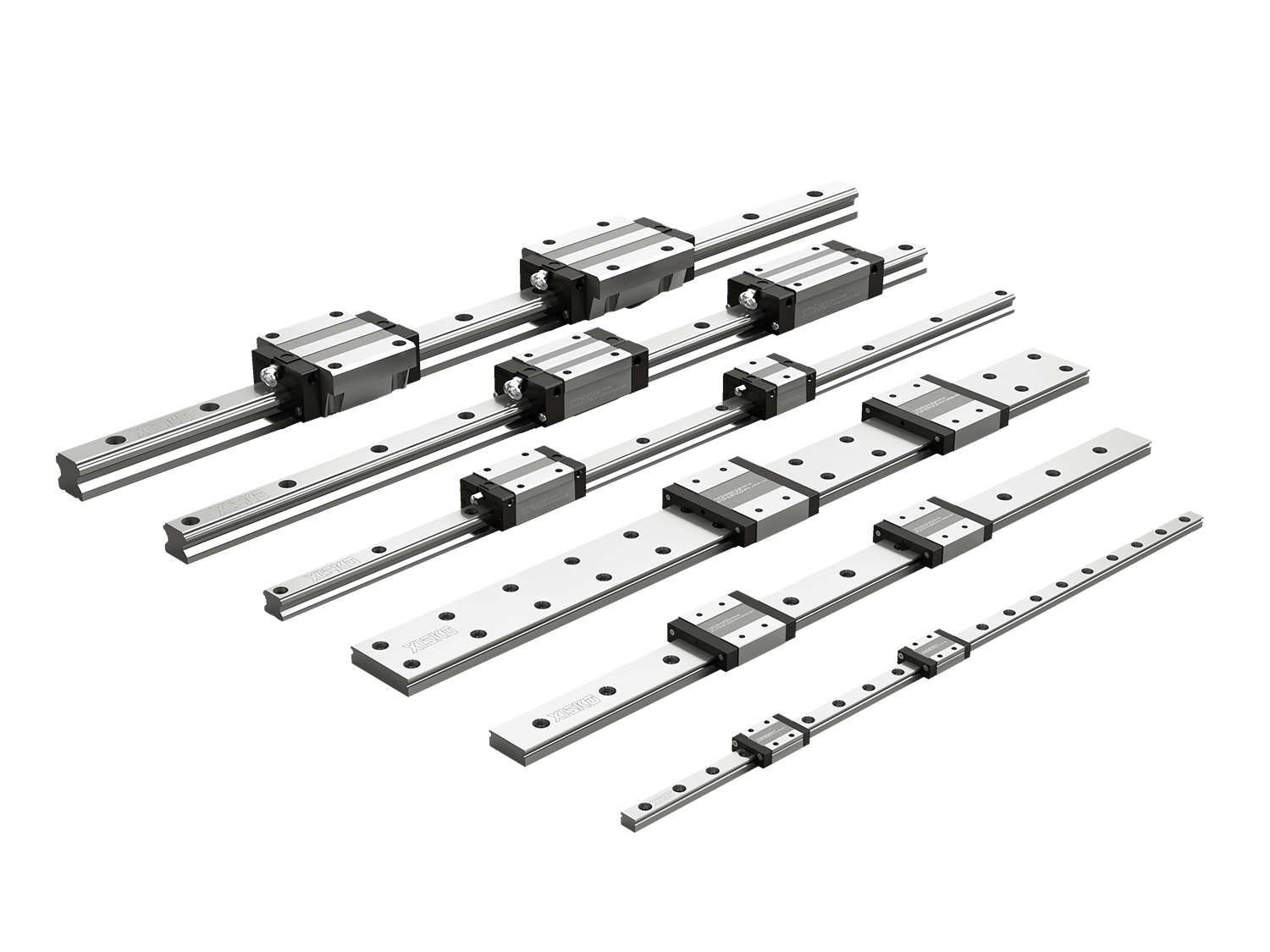
Simkawa provides multiple product series designed for different installation dimensions, loading conditions, and motion requirements.
| Simkawa Series | N | H | P | SP | UP |
|---|---|---|---|---|---|
| LG Heavy Duty | ✓ | ✓ | ✓ | ✓ | ✓ |
| LM Guideways | ✓ | ✓ | ✓ | ✓ | ✓ |
| LMGQ Linear Guideway | ✓ | ✓ | ✓ | ✓ | ✓ |
| LR Roller Guides | — | ✓ | ✓ | ✓ | ✓ |
| LGN Miniature | ✓ | ✓ | ✓ | — | — |
| LGW Miniature | ✓ | ✓ | ✓ | — | — |
The availability of a precision grade is only one part of product selection. Different Simkawa series also have distinct structural advantages.
LG Series: Designed for high-load applications requiring strong structural support and four-direction load capacity.
LM Series: Features a low-profile structure for machinery with limited installation space.
LMGQ Series: Uses a ball-linkage design to reduce contact between rolling elements and promote quieter operation.
LR Series: Uses rollers instead of balls to achieve higher rigidity and load-bearing capability.
LGN Series: Offers a narrow miniature structure suitable for small equipment, compact automation, and precision instruments.
LGW Series: Uses a wider miniature rail design to improve moment-load resistance, including applications with a single guide rail.
For small electronic devices and compact medical instruments, LGN or LGW may be more appropriate than a large standard rail. For heavy-duty CNC machinery, LG or LR may provide a more suitable mechanical structure.
The correct choice depends on both precision grade and operating conditions.
8. Frequently Asked Questions
What is the difference between H and P linear guide precision grades?
P-grade guides have tighter accuracy tolerances than H-grade guides. H grade is suitable for many automation and robotic applications, while P grade is often considered for CNC machining, laser processing, and precision assembly equipment.
Are UP-grade linear guides always better than P-grade guides?
Not necessarily. UP-grade guides provide tighter geometric tolerances, but their advantages may not improve equipment performance if other system components, such as the drive mechanism or mounting base, are the main sources of error.
Which precision grade is suitable for CNC machines?
P grade is a reasonable starting point for many precision CNC applications. More demanding systems may require SP or UP, depending on their geometric accuracy and machining requirements. Load capacity, rigidity, and preload must also be evaluated.
Can miniature linear guides be used in precision equipment?
Yes. Simkawa LGN and LGW miniature linear guides are listed with N, H, and P grades in the product overview used for this article. They are suitable for compact equipment where the selected grade, dimensions, load ratings, and environmental characteristics meet the application requirements.
Does a higher precision grade guarantee better positioning repeatability?
No. Linear guide precision is only one contributor to the performance of a positioning system. Repeatability also depends on the drive system, feedback devices, structural stiffness, temperature, and assembly quality.
Conclusion
Different industries place different demands on linear guide accuracy.
N and H grades are practical options for general machinery and industrial automation. P grade is commonly considered for CNC machining and precision manufacturing, while SP and UP grades address increasingly demanding applications in semiconductor technology, optical equipment, and precision measurement.