
While both linear guide rails and drawer slides facilitate linear motion, they differ significantly in terms of structure, precision, load-bearing capacity, and application scenarios. Simply put, "guide rail" is a broad term for guidance systems, whereas "slide rail" (or drawer slide) is a specific subset that typically emphasizes sliding friction or lightweight applications. This article compares linear motion rail guides and drawer slides to help you select the right linear motion component.
1. What is a Linear Guide Rail?
In a broad sense, it refers to a mechanical structure that guides components along a fixed linear or curved path; it is a collective term for all guidance components.
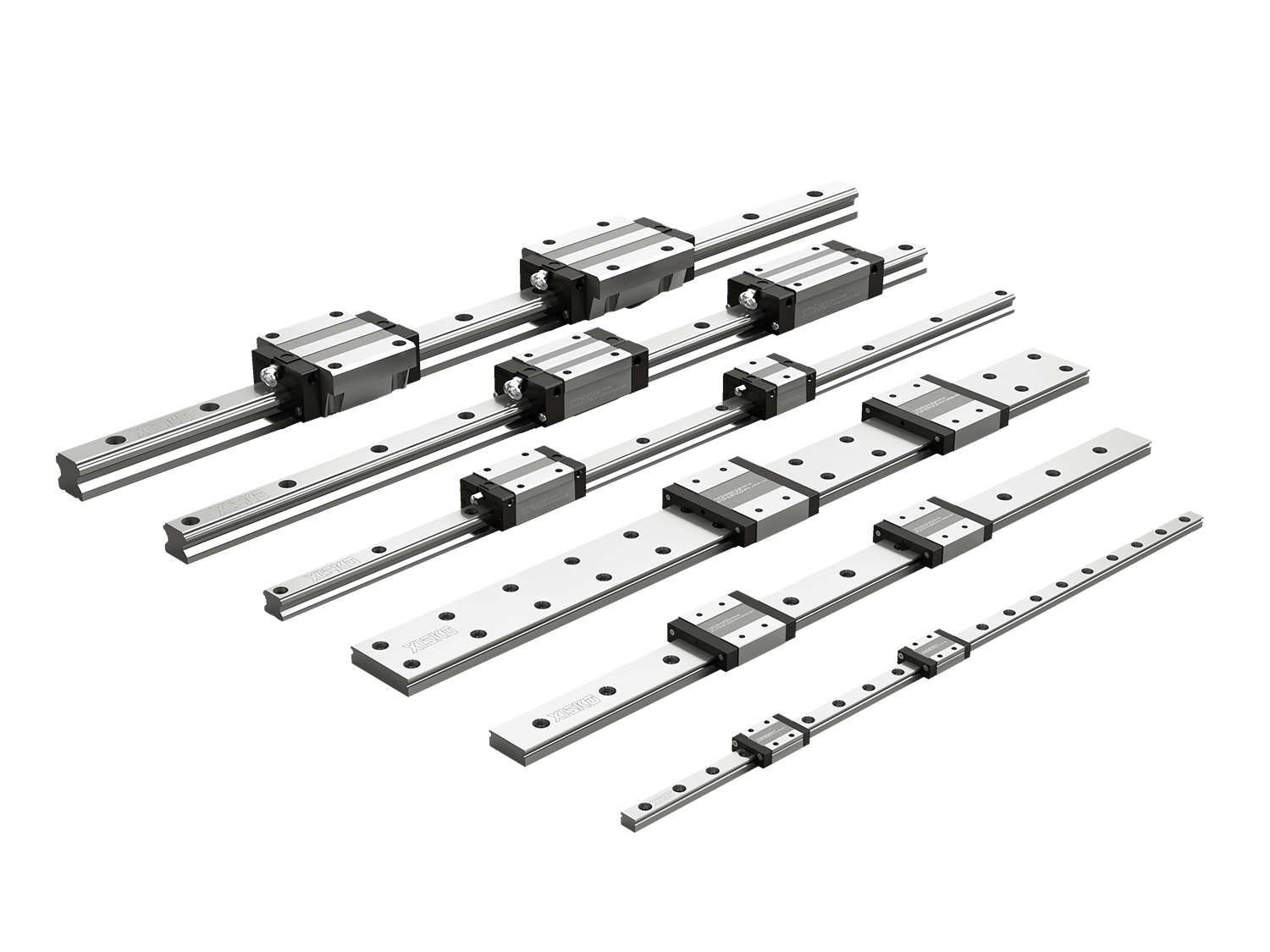
Its core functions are constraining the motion path and transmitting loads. Based on the friction mechanism, they can be categorized into rolling guides (using balls or rollers), sliding guides (direct sliding contact), and hydrostatic guides (using a liquid or gas lubrication layer), covering applications ranging from precision micro-equipment to heavy industrial machinery.

2. What is a Linear Drawer Slides?
In a narrower sense, it is a specific type of guide rail. Historically, the term referred specifically to guidance structures relying primarily on sliding friction (e.g., a metal slider in direct contact with a metal or plastic track). Although modern versions may incorporate some rolling elements, they still prioritize lightweight, standardized, and low-cost applications.
They are commonly used in home furnishings, office equipment, and light-load automation systems, featuring relatively simple structures (such as drawer slides or light-duty guides for small equipment).
3. Scope of Application
- Drawer Slides
Suitable for small furniture items like drawer cabinets, wardrobes, and desks. They enable smooth, quiet drawer closure—eliminating noise—and allow for easy opening.
- Linear Motion Rail Guides
Primarily used in large-scale industrial machinery and equipment. They can withstand loads in both axial and lateral directions and offer high positioning accuracy.
4. Load-Bearing Capacity
- Drawer Slides
Designed mainly for small furniture; load capacity is relatively limited, typically ranging from 20 to 45 kilograms.
- Linear Motion Rail Guides
High load-bearing capacity; capable of supporting heavy industrial equipment and machinery.
5. Price
- Drawer Slides
Relatively low cost; available on the market at affordable prices.
- Linear Motion Rail Guides
These are relatively expensive and must be purchased from specialized manufacturers; specific models and materials must be selected based on the intended application, with prices ranging from several thousand to tens of thousands of yuan.
6. Comparison of Pros and Cons
- Advantages of Drawer Slides
Relatively low cost, wide range of applications, and ease of installation and maintenance.
- Disadvantages of Drawer Slides
Limited load-bearing capacity, shorter service life, and susceptibility to environmental factors such as humidity and dust.
- Advantages of Linear Guides
High load-bearing capacity, long service life, and the ability to achieve high positioning accuracy.
- Disadvantages of Linear Guides
High cost, limited scope of application, and a requirement for professional installation and maintenance (with a relatively complex installation process).
7. Key Differences Between Linear Motion Rail Guides and Drawer Slides
| Comparison Item | Linear Guide | Drawer Slide |
| Primary Applications | Industrial equipment and precision machinery | Furniture, cabinets, and storage structures |
| Movement Method | Slider moves along a fixed guide rail | Telescopic movement of multi-section rails |
| Positioning accuracy | Higher | Lower |
| Operational rigidity | High | Relatively low |
| Load-bearing direction | Capable of withstanding loads from multiple directions | Primarily withstands vertical loads |
| Repetitive motion | Suitable for high-frequency reciprocating motion | Suitable for standard opening and closing operations |
FAQ
1. Can linear guides be used for furniture drawers?
Yes, but it is usually unnecessary. Linear guides entail higher costs and stricter installation requirements; standard drawer slides are sufficient for ordinary furniture drawers.
2. Can drawer slides be connected to a motor?
Technically yes, but standard drawer slides are not designed for precision automated drive systems. Long-term high-speed operation may lead to increased clearance and a shortened service life.
3. Which type of slide has a higher load-bearing capacity?
It depends on the specific model. However, given the same installation space, industrial linear guides generally offer superior multi-directional load-bearing capacity and rigidity.
4. Do both types of slides require lubrication?
Yes. Linear guides typically require periodic application of grease or lubricating oil. Some drawer slides come pre-lubricated from the factory, but they may still require maintenance after prolonged use.
Summary
Drawer slides and linear guides differ in terms of application scope, load-bearing capacity, and price. When making a choice, consider your specific needs and intended use to ensure the best outcome for your home renovation or machinery manufacturing project.