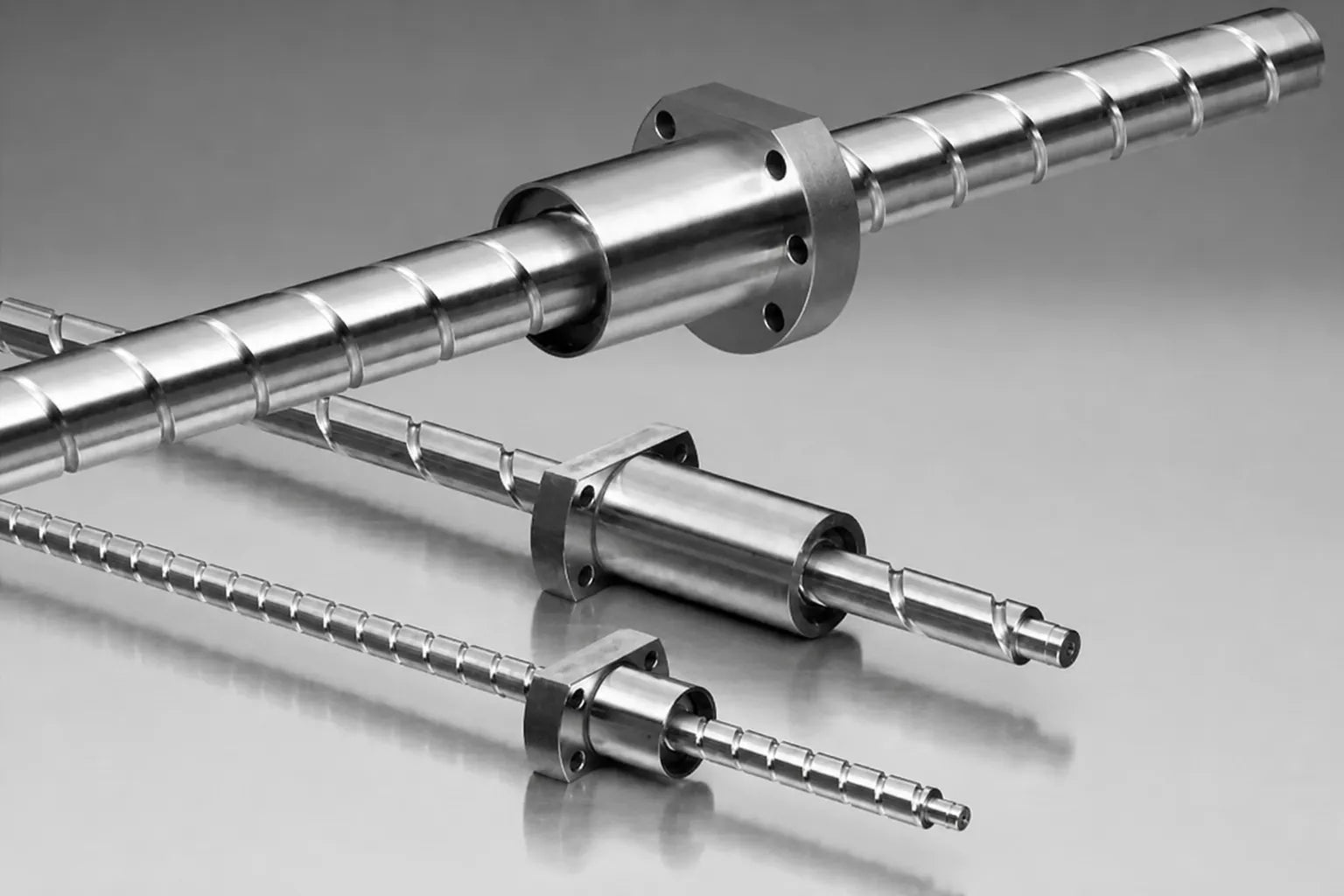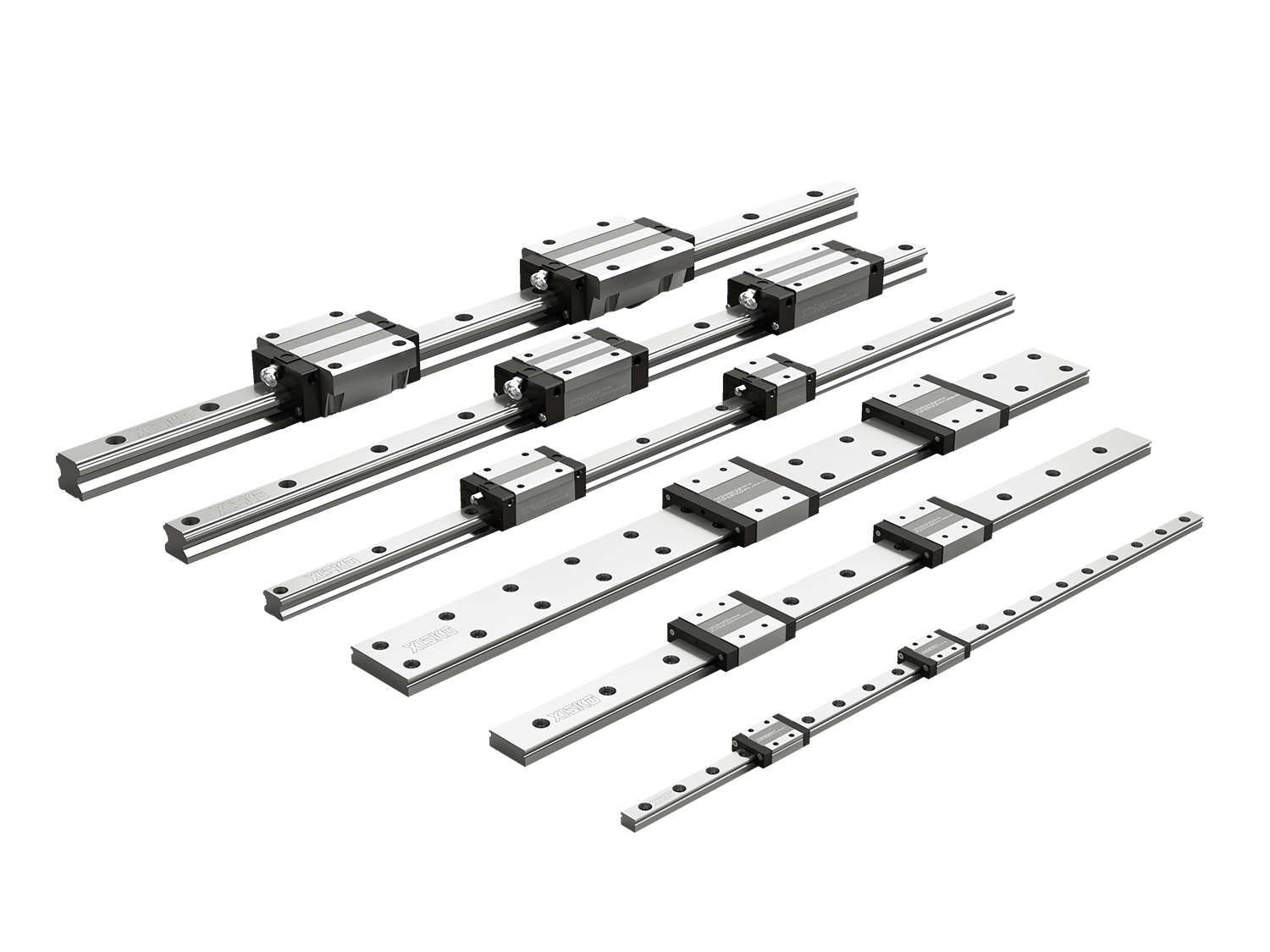
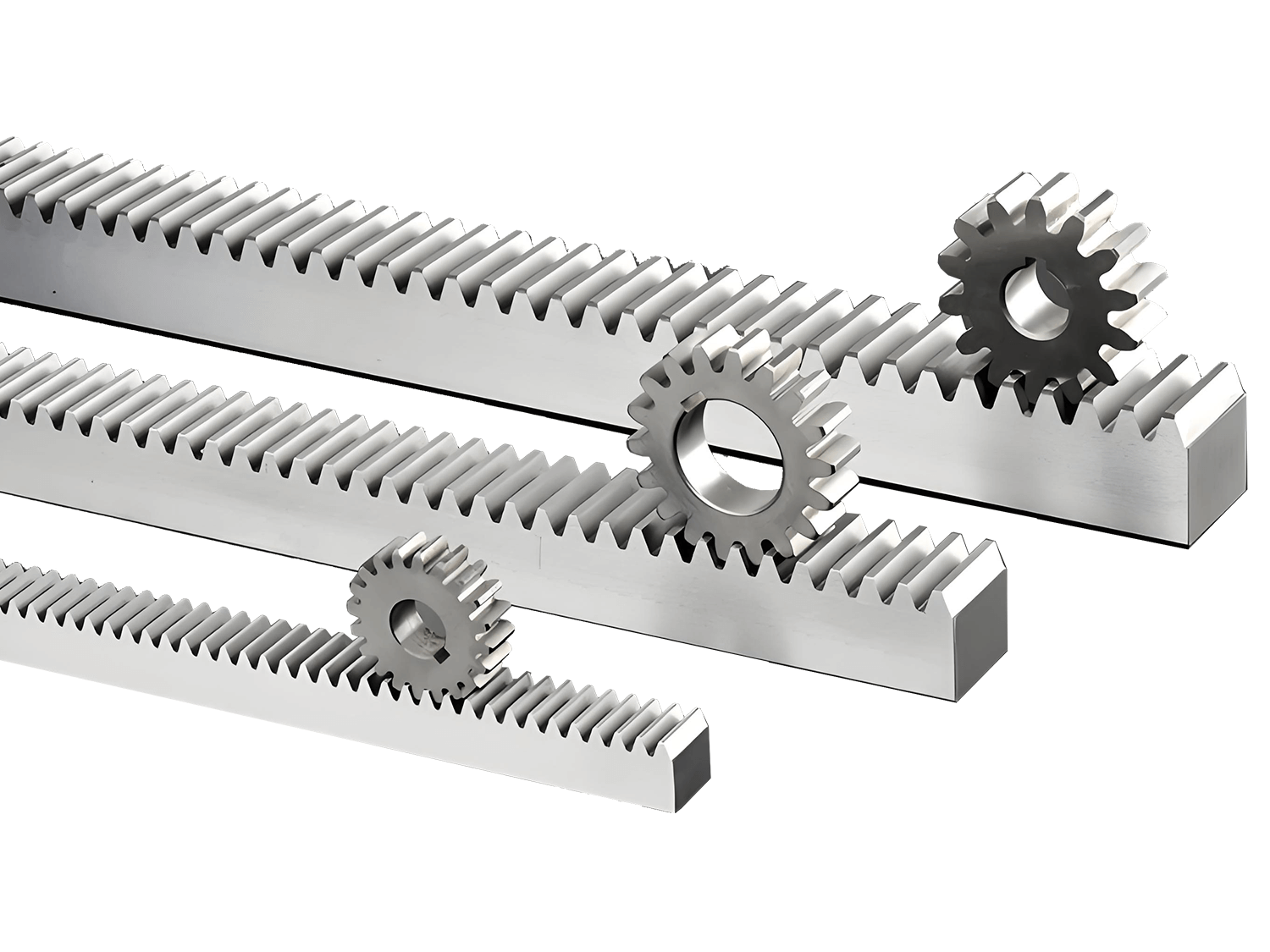
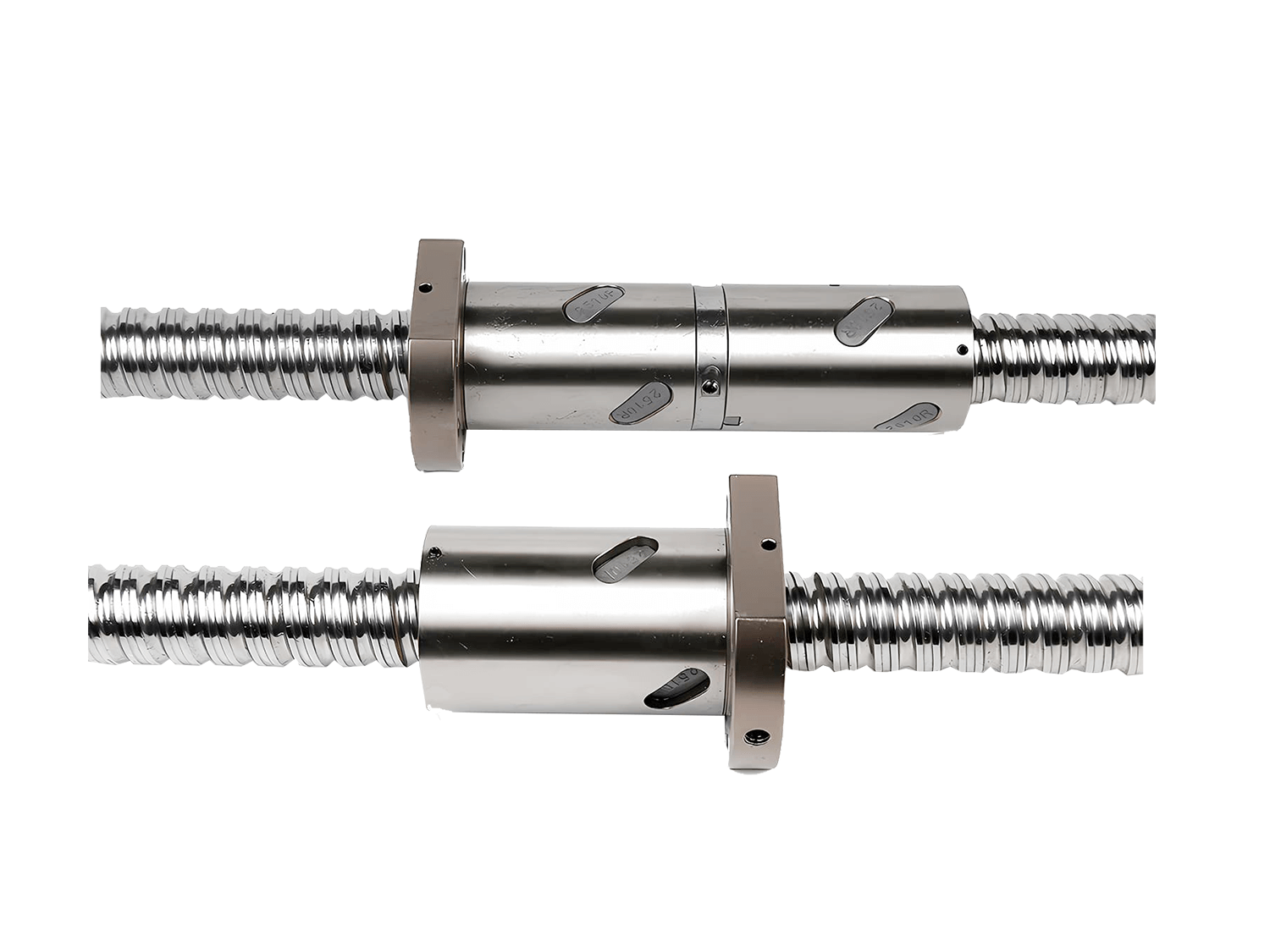

The main function of CNC machine tool guideways is to support the movement of three axes. CNC machine tool guideways can be divided into linear guideways, hardened guideways, and steel guideways. Many people in the machine tool industry may have questions about these three types of guideways: what are the differences between them? Which one is more suitable for machining? Below is some information to help you understand them.
1. Linear Guideways
Linear guideways, also known as linear guideways, generally refer to rolling guideways. Common structures include ball guideways and roller guideways. The difference is that ball guideways are point contact type, while roller guideways are line contact type. Their operating principle is the same: both rely on rolling motion on the guideway for propulsion.
Linear Guideways Advantages
- High Operating Speed
Due to the rolling friction operation and high-precision machining, processing efficiency and accuracy are significantly improved, with no crawling phenomenon;
- Multiple Selection Options
The structural form and precision grade of the linear guide can be selected, allowing for arbitrary configuration of the required linear guide model;
- Easy Assembly
High-quality assembly can be completed with minimal training;
- High Machining Accuracy
Generally, linear guides are manufactured using high-quality materials and precision equipment, resulting in high precision;
- Low Maintenance Cost and Long Service Life
Easy maintenance; linear guides are easy to replace after wear, and the low friction due to rolling friction extends their service life;
- Short Delivery Time
As linear guides are standard configurations, the ordering cycle is short unless special requirements are specified.
Disadvantages
- Compared to hardened guides, linear guides have relatively lower load-bearing capacity;
- Weaker stability compared to hardened guides, such as vibration resistance;
- Weaker resistance to contamination.
2. Hardened Guides
Hardened guides are generally cast as a single piece with the bed, and their material grade is generally not lower than HT250, with a Brinell hardness between HB180 and HB240. After high-frequency or ultra-high-frequency quenching, the guide rails typically achieve a hardness of HRC50° or higher, giving them excellent wear resistance (steel-inlaid guide rails are also a type of hardened guide rail). Hardened guide rails used in CNC machining centers are generally rectangular in structure, commonly known as rectangular guide rails.
Advantages
Capable of withstanding greater loads, suitable for roughing machine tools with large cutting depths and high feed rates; Large contact area of the guide rail results in smoother machine tool operation, suitable for machine tools with high requirements for vibration control.
Disadvantages of Hardened Guide Rails
- Low Machine Tool Operating Speed
Due to their movement and excessive friction, hardened guide rails typically cannot withstand high operating speeds.
- Inhomogeneous Material
Prone to casting defects such as sand inclusions, porosity, and looseness.
- High Machining Difficulty
Guide rails are generally integrated with main components, making it difficult to control dimensional tolerances, surface roughness, aging, and quenching processes during machining, resulting in parts quality failing to meet assembly requirements.
- High Assembly Difficulty
Assembly requires a combination of technical skill and craftsmanship, demanding assembly workers with a firm grasp of the overall machine tool precision.
- Short Service Life
Under the same maintenance and usage conditions, hardened guide rails have a shorter service life compared to linear guide rails.
- High Maintenance Cost
Repairing hardened guide rails is far more difficult and costly than repairing linear guide rails.
3. Steel Guide Rails
Steel guide rails generally refer to steel guide rails that are attached to the machine tool bed or scraped column mating surface using screws or adhesives, ensuring optimal flatness. Steel guide rails are mostly made of 9Mn2CrV grade. After quenching, their hardness can reach Rockwell HRC60±2°, possessing hardness and wear resistance unmatched by cast iron guide rails.
Advantages
- High Hardness
Because the steel guide rail is integrally quenched, its hardness can reach Rockwell HRC60±2°, and the hardened layer depth is more than twice that of surface-quenched rails.
- Wear Resistance
Higher wear resistance than cast iron guide rails, resulting in longer precision retention. Wear resistance is 5-10 times higher than cast iron.
- Strong Load Capacity
Due to the integral quenching process, the load capacity of steel guide rails is far higher than that of cast iron guide rails.
- Long Service Life
Longer repair intervals, high reliability.
- High Surface Quality
After precision grinding, the surface quality of the guide rail is higher than that of traditional hardened cast iron rails, with lower surface roughness, closer static and dynamic friction coefficients, and smoother movement.
- Good Interchangeability
Can be directly replaced during maintenance.
Disadvantages
- Complex structure, more adjustment links, higher cost;
- Lower rapid traverse speed than linear guide rails.
Comparison of Linear Guides, Hardened Guides, and Steel Guides
Linear guides offer high speed and precision, making them suitable for high-speed machining and the high-speed cutting and processing of small, precision molds. Pre-tensioning can achieve zero backlash between linear guides.
Steel guides and hardened guides utilize sliding friction, resulting in high load capacity, high strength, wear resistance, and long service life, making them suitable for heavy-duty cutting. Their movement requires a gap between the moving surfaces, and they have a higher coefficient of friction, resulting in lower rapid traverse speeds compared to linear guides.
Summary
There's no inherent superiority of one over the other when considering steel guides, hardened guides, and linear guides; the key difference lies in their suitability. Linear guide machining centers are better suited for machining workpieces with low hardness and high precision, while hardened guide machining centers focus on high-efficiency machining of high-hardness ferrous metals.
FAQ
1. What is CNC rails?
A CNC rail supports and guides machine components along the X, Y, or Z axis, ensuring smooth and accurate movement.
2. How do I choose the right CNC rail?
Consider machining speed, load capacity, accuracy, rigidity, maintenance requirements, and operating environment.
3. Which CNC rail is suitable for heavy cutting?
Hardened and steel guideways are better suited for heavy cutting due to their high rigidity, load capacity, and vibration resistance.